SK Hynix’s $15B Fab Bet: Why First Cleanroom Move-Up to February 2027 Matters
Three months can be a long time in memory manufacturing. Bringing a cleanroom forward from May to February 2027 gives SK hynix an earlier opportunity to install equipment, develop processes, and prepare capacity for customers. It does not guarantee three additional months of commercial shipments, but it can move the entire learning curve forward.

The investment figure needs clarification. SK hynix’s February 2026 announcement committed an additional KRW 21.6 trillion, approximately US$15 billion, to facilities for its first Yongin fab through December 2030. Including an earlier KRW 9.4 trillion commitment, announced facility investment reached approximately KRW 31 trillion, or US$21.5 billion. Separately, industry reporting estimated that construction plus eventual equipment spending could total KRW 150 trillion—not US$150 billion.
These are different scopes, currencies, and levels of certainty. Keeping them separate makes the strategy more intelligible.
The real story is not an oversized headline. It is the financial value of moving usable manufacturing capability closer to a period of strong demand—and the risks of investing today for a market that will evolve before the factory reaches maturity.
A Cleanroom Opening Is a Starting Gate
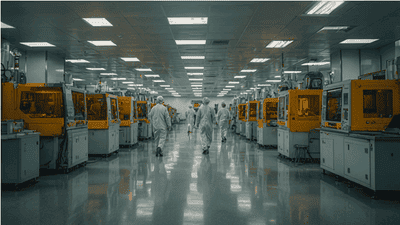
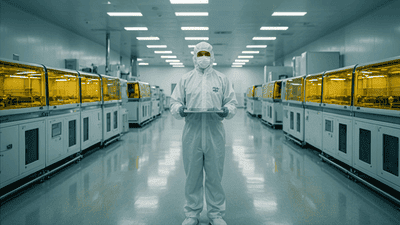
A cleanroom provides the controlled environment required for semiconductor manufacturing. Its opening is a significant infrastructure milestone, but not a synonym for full production.
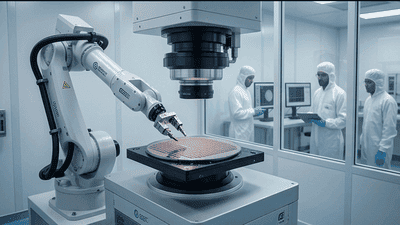
Equipment must be installed and validated. Processes must become repeatable. Early output must meet specifications. Customers may require qualification before accepting commercial deliveries.
The value of February therefore lies partly in sequence.
An earlier controlled environment can allow subsequent activities to begin sooner, provided equipment, utilities, staffing, and development programs are ready.
If those elements arrive late, some of the advantage disappears.
The appropriate interpretation is that SK hynix has brought forward an important prerequisite. Investors should not automatically convert the revised date into a specific revenue increase or a guaranteed wafer-output gain.
Why the First Three Months Can Matter Disproportionately
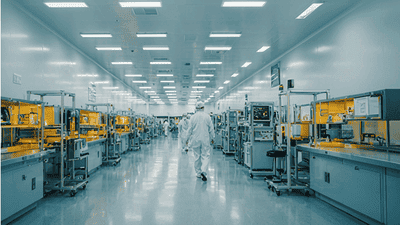
A new factory does not simply switch from zero to mature output.
Engineers learn through repeated operation: equipment behavior, process interactions, defect patterns, and manufacturing variation. Earlier access can create more opportunities to identify and correct problems.
That learning may benefit later production phases as well as the first cleanroom.
There is also a commercial consideration. Customers organize platform launches and procurement around manufacturing schedules. An earlier credible ramp can improve supply planning.
But the advantage must be earned through execution.
Starting earlier with an unstable process is less valuable than starting on time with reliable output. Speed matters because it can accelerate capability, not because calendar days alone produce saleable memory.
The Investment Is Staged, Not One Immediate Payment
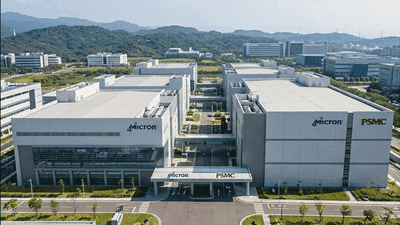
SK hynix’s additional facility commitment covers the completion of the main structure and five further cleanrooms, bringing the first fab’s total to six. The company expects spending to extend through the end of 2030.
This staged structure matters financially.
The headline amount is not necessarily spent in one year, and the first cleanroom does not represent the entire eventual factory.
Later phases can create flexibility around equipment installation and production expansion.
That flexibility is valuable in a cyclical industry. Management can compare actual demand and technological requirements with earlier assumptions as the project advances.
However, not every cost is reversible. Buildings, infrastructure, and long-lead commitments can create obligations before customer demand is fully known.
A phased program reduces some timing risk without eliminating the scale of the bet.
Interest Rates Put a Price on Delays
Large manufacturing projects commit capital before generating dependable operating cash flow.
Higher interest rates increase the cost of borrowed funds and the return investors require. They also reduce the present value of profits expected years ahead.
That makes delays financially important.
If expenditure occurs while commercial production moves further away, the project carries invested capital for longer without receiving the intended return.
An earlier cleanroom can improve the timetable, but the net benefit depends on whether acceleration introduces additional costs and whether downstream milestones move forward too.
For SK hynix, internal cash generation may finance part of the program. Even then, money has alternative uses.
The relevant question is not simply whether the company can afford Yongin. It is whether the project produces an attractive return under realistic financing and operating assumptions.
The Rate Environment Also Affects Customers
Memory demand sits inside larger investment decisions.
Cloud operators, server buyers, electronics manufacturers, and other customers evaluate projects under prevailing financial conditions.
Higher borrowing costs can delay infrastructure expansion or make buyers more selective. Cash-rich customers may be less directly exposed, but they still face investment hurdles.
That creates a two-sided rate sensitivity.
SK hynix is financing future supply while its customers are financing the systems that consume that supply.
An accelerated fab schedule is most valuable when customer deployment remains strong. If demand weakens before production matures, earlier capacity can increase exposure rather than improve returns.
Interest rates do not determine the memory cycle alone. They influence both sides of the investment chain.
Credit Analysts Focus on the Runway
Equity investors may emphasize market leadership and future earnings. Credit analysts ask whether the company can meet obligations through a less favorable scenario.
A large fab program requires more than construction funding. Equipment, development, inventories, staffing, and working capital create additional demands.
Some expenditure may arrive before customers accept output or before payment is collected.
The credit questions are therefore practical: how much liquidity remains, how spending is scheduled, and whether the company can absorb weaker prices or a slower ramp.
The estimated KRW 150 trillion fully equipped scale is particularly important to distinguish from the announced KRW 31 trillion facility commitment.
It signals the potential magnitude of future capital requirements, not a completed official commitment to spend that entire estimate immediately.
The Won Changes Both Earnings and Equipment Costs
SK hynix sells into a global market while incurring costs across multiple currencies.
A weaker Korean won can increase the translated value of foreign-currency revenue and improve the international competitiveness of domestic expenses.
But imported equipment, components, and materials can become more expensive in won terms.
That is especially relevant during a manufacturing expansion.
A currency movement that supports current reported earnings can simultaneously increase the cost of adding future capacity.
The net effect depends on invoicing, hedging, contracts, and payment schedules. Dollar equivalents attached to investment announcements are therefore snapshots, not fixed future cash requirements.
For analysis, the won-denominated commitments provide the more stable reference point. Currency scenarios then show how internationally sourced purchases and receipts could alter the outcome.
Commodities Matter Through the Infrastructure System
A fab requires buildings, electrical systems, water infrastructure, specialized piping, and dependable utilities.
Construction materials and energy costs influence the budget. Availability can influence the schedule.
Those effects are different.
A higher input price may be absorbed or renegotiated. A missing infrastructure connection can prevent equipment from operating altogether.
In September 2026, Yongin’s mayor emphasized the importance of delivering power and water infrastructure on time alongside the February cleanroom schedule. That highlights the project’s dependence on systems beyond the cleanroom itself.
Specialized manufacturing inputs add another layer. Chemicals and gases must meet process requirements, so their economics cannot be inferred from ordinary commodity prices alone.
The factory becomes useful only when the supporting system is ready.
HBM Demand Is Not the Same as Unlimited Capacity Demand
AI memory demand provides a strong rationale for expansion. It does not mean every additional manufacturing resource will earn the same return.
HBM requires DRAM production plus stacking, testing, and integration. Product generation, yield, and customer qualification determine which output is usable.
The new fab is therefore one part of a wider supply response.
Additional wafer capacity cannot independently remove a packaging constraint. Nor does output for one memory generation automatically satisfy demand for another.
This is why product allocation matters alongside factory size.
SK hynix’s announcement described the Yongin project as supporting high-performance memory and future demand. Investors should follow the actual equipment and product plans rather than assume every cleanroom will immediately produce the same premium product.
Earlier Supply Can Help Buyers Without Breaking Prices
The first effect of additional output may be improved availability rather than lower prices.
If qualified demand exceeds supply, customers can absorb more memory while pricing remains firm.
Over time, however, the balance changes as competitors add capacity and buyers adjust procurement.
An accelerated cleanroom cannot be analyzed independently of those responses.
Earlier output could allow SK hynix to secure customer allocations and improve returns during a constrained market. The same capacity could face weaker economics if it ramps into excess supply.
Neither outcome follows from the construction date alone.
The relevant measure is qualified production relative to consumption—not the number of factories announced or the intensity of shortage headlines.
The Supply Chain Receives Revenue Before the Fab Does
Yongin’s expenditure creates opportunities for construction contractors, equipment suppliers, materials providers, and engineering services.
Their revenue can arrive well before the fab generates mature operating returns.
This timing difference matters for financial markets.
A supplier can benefit from project spending while SK hynix remains in the investment phase. Conversely, the memory producer may capture the larger long-term benefit if the plant operates competitively.
Investors should avoid counting the same expenditure as multiple independent pools of demand.
Construction spending, equipment sales, and eventual memory revenue belong to different stages of one economic chain.
The best opportunity depends on valuation, margins, and risk at the specific stage—not simply association with Yongin.
Three Scenarios for the February Advantage
In a strong-execution scenario, infrastructure and equipment are ready, process learning advances, and customer demand supports the ramp. The earlier cleanroom creates meaningful operational flexibility.
In a partial-benefit scenario, the opening moves forward but later milestones do not. The facility is available sooner, yet equipment or qualification limits the commercial gain.
In a weaker-market scenario, the timetable improves while demand conditions deteriorate. Execution succeeds, but returns fall short because pricing or utilization disappoints.
These are scenarios, not forecasts.
They show why construction progress and investment performance should be evaluated separately. A company can build effectively and still encounter an unfavorable market.
What Investors Should Monitor
The central requirement is alignment: cleanroom readiness, equipment, utilities, process development, and customer demand must converge.
A useful scorecard includes:
- Actual opening and equipment-installation milestones.
- Power, water, and supporting infrastructure readiness.
- Qualification progress and saleable production.
- Capital expenditure relative to the announced phases.
- Cash generation and funding flexibility.
- Currency effects on imported investment costs.
- Memory pricing, inventories, and customer consumption.
These indicators reveal whether the schedule improvement becomes commercial value.
They also distinguish a healthier supply response from expansion that increases financial commitments faster than productive capacity.
Why February Matters
Moving the first cleanroom forward by three months is meaningful because manufacturing capability develops through time and repetition. Earlier readiness can support earlier learning and better customer planning.
But the claim should remain precise: this is a cleanroom milestone, not a promise of immediate full production, and the relevant large estimate is KRW 150 trillion—not US$150 billion.
The macro linkages determine how valuable the acceleration becomes. Rates price the waiting period, credit supports endurance, currencies alter equipment costs, and infrastructure governs execution.
SK hynix’s bet is ultimately on being ready when customers need qualified memory. The February date improves that possibility. The investment return will depend on everything that follows it.
Related Posts